

Key takeaways:
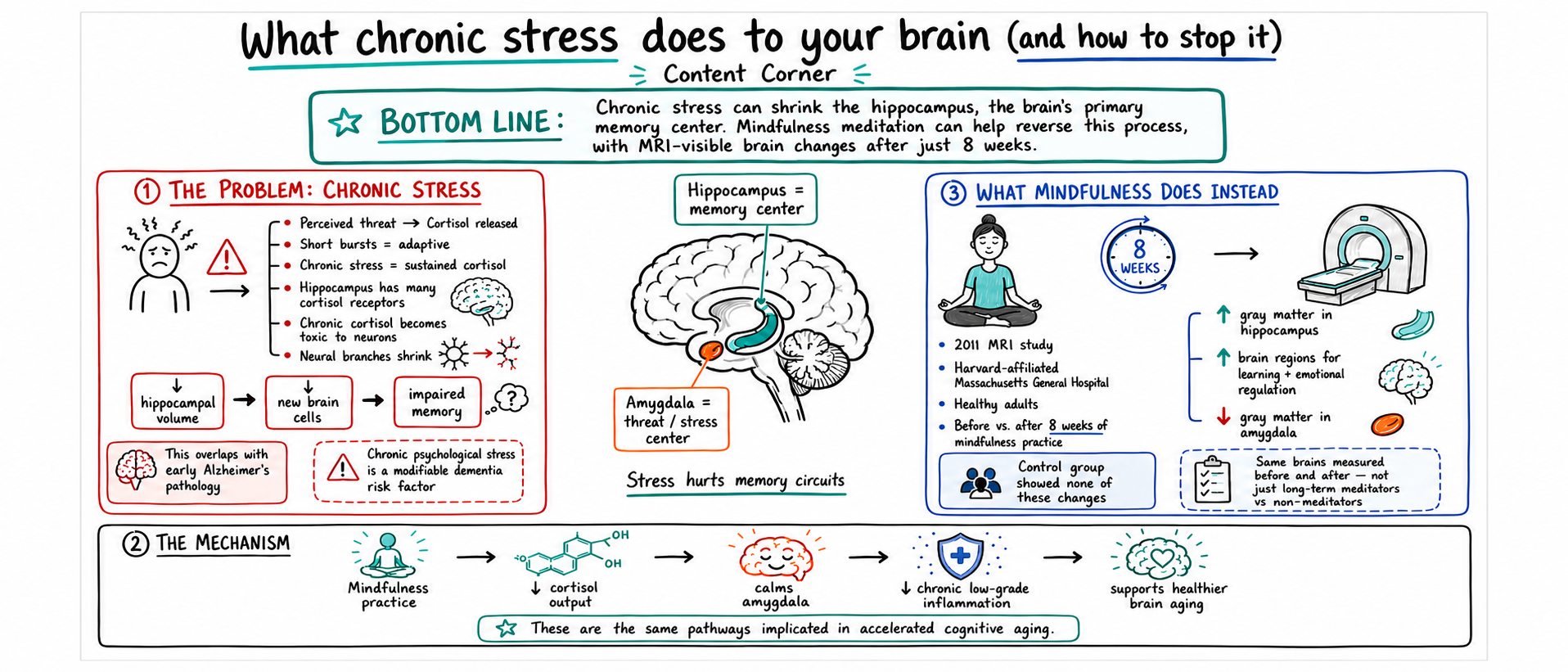
Chronic stress does more than affect your mood. Sustained cortisol exposure physically shrinks the hippocampus, your brain's primary memory center. The encouraging part: this is reversible. In controlled neuroimaging studies, eight weeks of mindfulness practice increased gray matter in the hippocampus and reduced it in the amygdala, the brain's threat-detection center. Managing stress is one of the most accessible ways to protect your long-term cognitive health.
Stress is easy to file under "quality of life" rather than "brain health." The neuroscience tells a different story, and it's a hopeful one, because the same biology that makes chronic stress harmful also makes it one of the most modifiable risks you can act on.
Below, we cover what chronic stress does to the brain, the landmark study showing mindfulness can reverse it, the techniques that actually work, and how to measure your progress.
What does chronic stress do to your brain?
When your brain perceives a threat, it releases cortisol. In short bursts, this is helpful, it sharpens your response to a genuine challenge. The problem is sustained elevation.
Under chronic stress, prolonged cortisol exposure becomes toxic to neurons, and the hippocampus is especially vulnerable because it is packed with cortisol receptors. Over time, that exposure causes the neural branches that let brain cells communicate to shrink. The downstream effects are measurable: reduced hippocampal volume, fewer new brain cells, and impaired memory.
This matters beyond day-to-day forgetfulness. Hippocampal shrinkage is one of the earliest detectable structural changes in Alzheimer's progression, and chronic psychological stress is now recognized as a modifiable dementia risk factor in its own right. In other words, stress sits on the same biological pathway as accelerated cognitive aging, which is precisely why acting on it has such a high return.
Can mindfulness reverse stress-related brain changes?
Yes, and the evidence comes from before-and-after brain imaging, not self-report.
In 2011, researchers at Harvard-affiliated Massachusetts General Hospital published a landmark neuroimaging study. Using MRI, they measured gray matter density in healthy adults before and after eight weeks of mindfulness practice. Participants showed measurable increases in gray matter in the hippocampus and in regions involved in learning and emotional regulation. At the same time, gray matter in the amygdala, the brain's primary stress and threat-detection center, decreased. A control group who did not practice mindfulness showed none of these changes.
The design is what makes it compelling. This was not a comparison of lifelong meditators against non-meditators, where genetics or lifestyle could explain the difference. It was imaging of the same brains, across just eight weeks of practice. You can read the full study here.
How does stress management protect the brain?
Mindfulness and related practices work through a few overlapping mechanisms. They reduce cortisol output, calm the amygdala's threat response, and lower the chronic, low-grade inflammation associated with sustained stress. These are the same pathways implicated in accelerated cognitive aging, so quieting them protects the brain on more than one front at once.
The practical implication is freeing: you do not need the "perfect" technique. You need to move these levers consistently, and there is more than one way to do that.
What stress management techniques actually work?
Different techniques reach the same biology through different doors, which means you have options. These are the Essential, evidence-based interventions to start with:
- Slow, deep breathing. Controlled breathing activates your parasympathetic nervous system, your body's "rest and digest" mode. Even a few minutes measurably reduces cortisol and heart rate. For many people this is the easiest entry point.
- Mindfulness meditation. The technique behind the brain-imaging study above. Consistent practice, even 8 to 10 minutes daily, produces measurable effects on stress hormones and self-reported stress within a few weeks.
- Nature exposure. Time in natural environments is associated with lower cortisol, lower blood pressure, and improved mood. The effect appears to be dose-dependent, so more time outdoors tends to help more.
- Social support. Strong social connections help buffer the brain against the effects of stress.
How do you start a 10-minute mindfulness practice?
You do not need a cushion, an app, or a quiet mind. Here is the whole practice:
Find a quiet spot and sit comfortably. Bring your attention to the physical sensation of your breath, the air moving in and out. Your mind will wander. That is not failure, that is the exercise. Each time you notice it drifting and bring it back, you are doing the rep that builds the skill. There is no perfect posture and no requirement to empty your mind. Just ten minutes of practicing the return.
A note on getting started: Don't overthink which technique to begin with. If sitting meditation feels like a stretch, start with a few minutes of slow breathing or a walk outside. The research is clear on this point: the technique that protects your brain is the one you will actually do.
How can you track stress and its effects on the brain?
You can't feel your inflammation dropping, but you can measure it. Chronic stress shows up in bloodwork as elevated hs-CRP, one of the same inflammatory markers associated with cognitive decline. When a stress-management practice starts working, that number moves, and lab panels let you watch it happen.
The effects ripple outward from there. Sleep quality typically improves within weeks of consistent practice, and better sleep gives your glymphatic system, your brain's overnight waste-clearance crew, more time to do its job.
This is what makes stress management such a high-leverage intervention. It rarely works alone. Better stress regulation improves your sleep, better sleep amplifies the benefits of exercise, and lower inflammation makes anti-inflammatory nutrition work harder. Pull one lever, and the whole system responds.
The bottom line
Chronic stress physically changes the structure of your brain, and mindfulness and related practices can measurably change it back. You don't need to overhaul your life to benefit. Ten minutes of breathing or meditation, a walk outside, or time with people you care about all move the same biology. Start with whatever feels easiest, stay consistent, and let the results compound.
If you're working with a Brain Health Coach, the De-Stress section of your protocol is a natural starting point.
Ready to build a personalized stress management practice? Check if your insurance covers coaching.
Frequently asked questions
Does stress really shrink your brain?Yes. Sustained cortisol exposure from chronic stress is associated with reduced hippocampal volume, the brain region responsible for memory. It also reduces the formation of new brain cells and impairs memory over time.
Can you reverse brain changes caused by stress?Evidence suggests you can. In a 2011 MRI study, eight weeks of mindfulness practice increased gray matter in the hippocampus and decreased it in the amygdala in the same participants, changes not seen in a non-practicing control group.
How long does it take for mindfulness to change the brain?Structural changes were measurable after eight weeks of practice in controlled imaging studies, and effects on stress hormones and self-reported stress often appear within a few weeks.
What is the best stress management technique for brain health?There is no single best technique. Slow breathing, mindfulness meditation, nature exposure, and strong social connection all work through overlapping pathways. The most effective one is the one you will do consistently.
Is chronic stress a risk factor for dementia?Chronic psychological stress is now recognized as a modifiable dementia risk factor. Hippocampal shrinkage, which stress contributes to, is one of the earliest structural changes seen in Alzheimer's progression.